
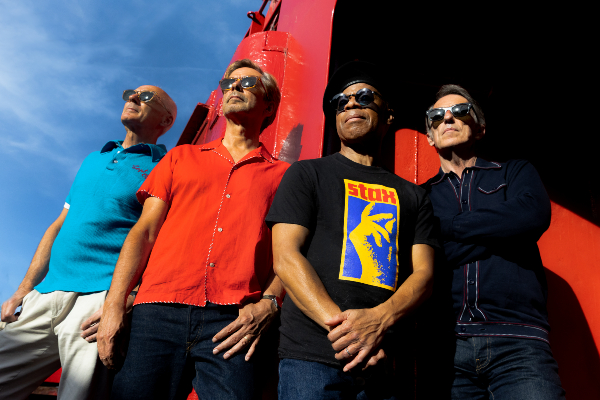
You’d be forgiven for thinking of Haircut 100 as a new wave one-hit wonder. While their debut album, 1982’s Pelican West, produced four top 10 singles in their UK homeland, in the States, only “Love Plus One” cracked the top 40. While the band did release a second album, Paint and Paint in 1984, it was recorded after singer/guitarist and principal songwriter Nick Heyward had parted ways with the band, and failed to make any impression.
Fortunately, Haircut 100’s story didn’t end there. With Pelican West’s mix of pop smarts, jazz touches, and Caribbean rhythms proving timeless in the subsequent years, in 2004, all six members—Heyward, guitarist Graham Jones, bassist Les Nemes, drummer Blair Cunningham, saxophonist Phil Smith, and percussionist Marc Fox—were persuaded to reform the band on VH1’s Band Reunited, a show overseen by legendary DJ and new wave aficionado Richard Blade. That reunion eventually led to more gigs, albeit not for several years after. Indeed, it wasn’t until 2023 that the reunion stuck, when the band—now solidified as Heyward, Jones, Nemes, and Cunningham—played BBC 2’s Piano Room program with a symphony and did a tour of the UK, then toured the U.S. the next year with contemporaries ABC and Howard Jones.
And now the four-piece Haircut 100 has released a proper follow-up to Pelican West, Boxing the Compass, a record of sunny, soul-inflected pop that shares many of the same traits as the band’s debut, and will once again be hitting the road, this time with Squeeze and Adam Ant. I caught up with Heyward and Cunningham to discuss the album and what it took to get to this point.
When you did the VH1 show, was that just a spoof, or did that become the impetus for the proper reunion?
Nick Heyward: No, that was real. Richard Blade turned up at my barbecue unannounced. I had no idea what was going on at all. It was like I found out Richard’s coming over, and then Richard Blade is walking up my driveway. Did he know we were having a barbecue, and have we got enough sausages? And I was absolutely porky, to say the least. I was about 14 stone, which, considering I’m now 161 pounds, is a lot different. It’s like over 200 pounds. So yeah, I was just caught unawares and not at my fighting weight, that’s for sure.
Blair Cunningham: Talking about weight, we were in rehearsal, and Nick goes, “You’ve got to get off those pies, because you’re going to be playing really slow.” We were playing, and I think I was playing in halftime. I just broke out in all this sweat. And he warned me, “Got to get away from those pies.” So that was it, just fish and salad. No more potatoes. Now I’m really happy because I’m right down to the 160. So it’s cool, I’m not dragging.
NH: You know, all four of us are the same weight now.
BC: We should call ourselves the 160s.
Haircut 160!
BC: I remember when the first Haircut came out, everyone was like, “Is that a style called Haircut 100?” They thought it was a particular haircut. It was really throwing them because they couldn’t work it all out.
Obviously, after the VH1 thing, though, there was a period of time before you started doing more shows. Did it take some consideration? What occurred between the VH1 show and then actually doing it in a proper way?
NH: Well, we did try, didn’t we? We tried to stay together around the time of the VH1 reunion. But you need a manager. That was the one position that we never had right. Our original manager was great in the early days, but once he left, we were rudderless without a manager, and then it was never filled. That was the big reason why we didn’t make it in the first place. And same thing any time we’ve tried to get back together since. But this time, there was a lot of help from outside. Other things, other forces were involved that wanted us to stay together and keep going. We had a gig put together for us at the Shepherd’s Bush Empire. That was just a case of who’s up for playing this gig, and the four of us turned up that night. That show sold out, and then the BBC invited us to go on the Piano Room, and again the four of us turned up. We played with strings, and it was beautiful. And then we got a call from Melvyn Taub, who is one of the most wonderful men you could ever imagine wanting to be your manager. I mean, it’s a crazy job to even consider because, you know, this is a band that hadn’t been together for over 40 years! But he loved the band. He was part of Hall or Nothing management, who specialized in bands like Wet Leg and Manic Street Preachers and others, so they knew their stuff. And so with their help, then we had a tour. And suddenly we’re still together.
BC: I think it’s Melvyn’s spirit. He’s guiding us still. Melvyn is still there. He’s just there spiritually keeping us together. That was his dream. He said, “I got to keep this band together.”
NH: It was like his last wish before he went, wasn’t it?
He passed away?
NH: Yeah, pancreatic cancer. It was awful. Anybody who met Melvyn knows what a lovely guy he was. So he’s in power-pop heaven now.
So Phil and Marc aren’t involved anymore; they just weren’t interested?
BC: The invitation has always been there. But if you don’t reply, that means you’re not interested.
As far as getting back together, were there hatchets that needed to be buried?
NH: We weren’t really interested. We just got on with the music. That’s why it happened. The thrill of being in the band and playing together, right from the off again, right from the Shephard’s Bush Empire show. It was like, “Ah!” And we all get on, don’t we, Blair?
BC: We all get on. You don’t have any kind of withdrawals of someone not there anymore. When you’ve been given a choice, that’s your choice. You can’t just drag it on. You say, “Okay, well, we’re going to move on then. Thank you very much.”
NH: There were things that we did that we learned from. Now, everything is just split equally, including songwriting, everything. Everybody’s learned from the music business that everything’s got to be shared equally if it’s a band. That’s a band. We’ve learned from how it panned out. There are so many bands that split up through songwriting issues, so there’s one solution.
Did you feel like you needed the affirmation of doing it live and seeing a room full of people, regardless of how it felt being together, to continue on?
NH: Did we need that? I mean, it’s like when you’re a band and a real band, and you play, it’s a lovely thing, isn’t it, Blair? It’s a lovely feeling to be in a band because it’s not an egocentric thing; it’s a team.
BC: Yeah, it’s a working force. If everybody is pushing together, and, okay, you don’t want to get involved. Okay, fine. The links tighten and tighten, and then you’ve got four links. You can’t break that, and you just carry on. If you’re trying to play the emotional game and say you can’t do it without me, then, blah, blah, blah. But we’re not about the past history’s arguments and disagreements and all that. That’s just the music business making that kind of angry person. At the end of the day, you’ve been given an option, and it’s your choice. So the band has moved forward equally, and it’s fine. They’re probably thinking, “Oh, gosh, I wish I’d just replied back to that email four years ago.”
NH: Yeah, because it’s lovely. It is. I love this band. I love being in this band.
BC: I know, it’s a lot of fun. It’s absolutely amazing.
NH: Anything you do, it’s all about being on stage, and it always is. It’s always about that because that’s when a band is a band, in the moment. And the set’s evolving. Our wish has come true, and we’ve got a second album to add into it. It’s not just Pelican West that we’re playing. There are other songs, and they all fit together really well. We’ve got a really great set now. Everything’s complementing each other. It’s a celebration of life and being together for this moment, all one here in this gig, now right now. Even if it’s a big place, it all becomes a small club where you can just dance. And you cannot not dance to this music.
BC: And the brass players we’ve got. Oh, my God, these guys! I call them the dancing rabbits. They do their little routine up there. It’s absolutely mind-blowing.
You mentioned the new record. It seems like it’s been in the works for a while. Was it a long time in the making?
NH: Yeah, it was. It took a while to get together because we had no budget. So it was making an album for nothing. It was tough, but we’re doing this because we love it. We’re enjoying it, and we know that we cannot stop because we know what happens when you stop. You stop, and then it is no more. And we’ve done that, so there’s no option. Okay, it’s a strange music business now, but it’s always been pretty strange. Hopefully we’ll have a budget for the next album now that we’ve done this one. So we made a decision: let’s do this.
BC: Yeah, exactly. But also to add on to what Nick was saying, it was great because there was no deadline. There was no rush to finish anything. When record companies get involved, they need a deadline. So you get in that panic mode, and you rush. Like we’re doing now, we just flow. There’s no big rush about the whole thing.
How long ago did you start it?
NH: Quite straight away. Melvyn said, you know, I think you should go in and do some demos the old school way and see if we can get a record deal. So we went in with Sean Reid, who plays with Dexys Midnight Runners and Edwyn Collins and has a studio in Hackney in his house.
Did it take a minute to kind of rekindle the chemistry as far as writing together?
NH: More like 20 seconds. We just play, and it’s Haircut 100. You just connect, and you’re a band. Blair was in the drum booth. Les, Graham, and I were in the control room with Sean, and he was just like, “I get Haircut 100. Right now listening to it, I get you guys.” Being a musician, he understood the dynamics and how we were working fast. We’d rehearsed a little bit, and we kind of knew what we were doing. We’d do a few takes and then go for one. That’s what we did with “Dynamite.” We reeled off a load of tracks with Sean, like 10, I think, thinking that they were going to be demos. But we didn’t get the record deal, so we just kept going. We’re not going to split up. We just carried on and knew we’d come up with the money somehow. “Who’s got a studio? Do you know any friends that have got a studio to do some overdubs?” It’s just like that. They’re on the team, or they’re not on the team. We’re all working for hardly anything because we’re investing in the future of it. You can’t ask that of everybody, but we’ve got a lovely team at the moment.
When you were making Pelican West, given the influences that you had and that you weren’t just making fabricated pop music, did you see it having the commercial potential at the time? Did you feel like the success that you enjoyed was on the way?
BC: We didn’t, but we were just young, though. We didn’t expect anything, especially that massive. It got going really fast, especially after Top of the Pops. Once you’re on the TV, that’s it. You’ve made it. You’ve done the whole thing, and things are just going to fold together.
NH: We were the right age, though, weren’t we?
BC: We were the right age. It was perfect. Then you go out and do the tour, and that’s sold out for two nights, and sometimes three nights, in the same place. It was just really fast and really bad. One of the places we played, the security guard said, “Okay, there’s some screaming fans outside. Just hold your head down. We’ll guide you to the coach. Just don’t look up.” So what I do? You don’t tell me not to look up, then I have to look up to see what’s going on. All I saw was these fingers just come across my face, and one finger just pulled my jaw muscle right back. I got to the coach, and he says, “Didn’t I tell you not to look up?” Good old Kenny, I liked him. He was so funny, bless him. He’s not with us.
NH: No, he’s not here now. You know, neither is Bob Sargeant, who produced the album. He’s gone as well. We felt like we were in really safe hands with Bob because, yes, “Love Plus One” was good in our set and “Favourite Shirt” was good in our set, but Bob turned them into glittering pop songs that sounded like The Beat, which was the goal because we’d grown up with The Beat. To be working with the same producer was a thrill for us. We couldn’t believe it, and at 100 Chalk Farm Road. It felt like synchronicity. It was all falling into place. I remember the first time Bob played marimbas on the beginning of “Love Plus One,” hearing it and going, “This sounds really, really good.” He got it. Bob got the band, totally got it.
BC: We just got very, very lucky with all the people we met and worked with.
NH: He was really good at organizing. He was like George Martin. He’d take this bit here and put that bit there, take the key elements of the song, repeat them here and there. Bob had that natural gift that we didn’t have as youngsters. We loved the records we loved, and we were enthusiastic about recording, but we were raw at that time. The structure wasn’t there yet.
BC: Yeah, he would put all the puzzle pieces in the right place, and it was just magic, absolutely magic. He was brilliant.
Have you noticed the band’s influence over the years? What do you think is the legacy of the band? I mean, the first time I heard Vampire Weekend, I thought of you guys.
NH: I think The Jam had stripes on their sleeve for The Gift, so it looked like a Haircut 100 sleeve. And it was funky. One of the songs—I think it was called “Precious”—I definitely remember thinking that we were inspiring people. There were bits of influence in bands like Spandau (Ballet), who started to dress a little bit similar. But everybody was influencing each other around that time in the early ’80s. It was all kind of symbiotic the way it was happening.
But we can’t be anything other than the influences that we are and the people that we are. So when we get in a room together, it’s unlike anybody else on the planet. That’s the uniqueness, the magic, and the mystery of this band.
Your Comments