
 You’ve probably seen the “My 9 Albums” postings that have been making the virtual rounds the last few weeks. I pretty much went with the first records that sprang to mind, as there are so many more than nine albums in my collection that hold a special place in my heart, resonating deeply on either a visceral or cerebral level, or more likely, some combination. The last two albums that Calla made before parting ways, 2005’s Collisions and 2007’s Strength in Numbers, could easily occupy two slots. The pair of dimly lit records possess a certain emotional electricity that courses through their entirety, with frontman Aurelio Valle either barely keeping that electricity in check or allowing it to explode in flashpoints when no longer able to contain it.
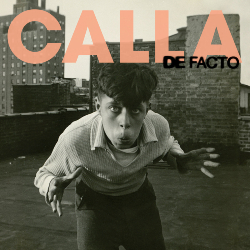
As such, when Calla started to slowly eke out new music a couple of years ago, it was a very welcome unexpected return. And now they’ve self-released their first full-length album in 19 years, De Facto, on Valle’s Nuevo Leon Recordings. The record leads off with “Pick Your Battles,” the first of those songs Calls previously released. Seemingly picking up where Strength left off, it pairs Valle’s near-deadpan delivery of accusatory lyrics with a piano line and streaks of guitar. More curious are the two covers (also previously released) that follow. Their take on Eddy Grant’s disco-inflected “Killer on the Rampage” (the title track from the album that spawned his megahit, “Electric Avenue”) works amazingly well. They slow the song down just enough to give it a hazy, dreamlike quality while retaining its underlying groove. Meanwhile, their cover of Nina Simone’s “Sinnerman” is equally effective if less divergent.
But the most interesting song they cover here is a new one: “The Breaking Hands,” a track from the album The Gun Club made with the Cocteau Twins’ Robin Guthrie, Mother Juno. Even with a few less ethereal bells and whistles than the original, Calla still conveys the song’s inherent otherworldliness. They also cover themselves on De Facto, redoing “Paralyzed” from Strength by giving it an electronic pulse that robs the song of some of its potency, but is nonetheless interesting. More than anything, De Facto feels less cohesive than its predecessors, more a collection of songs than a unified work. Still, there’s more than a little magic here to make it memorable.
Your Comments