
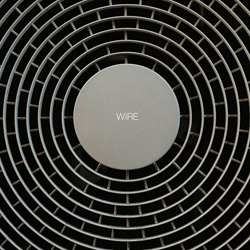
 If time has proven anything, it’s that Wire are forever the iconoclasts. After exploring some ideas leftover from the ’80s with their last album, 2013’s Change Becomes Us, as well as reissuing the 1981 live album, Document and Eyewitness, last year, the band has continued onward and forward with its latest innocuously self-titled record (Pink Flag Records).
Like 2011’s Red Barked Tree, Wire mixes the aggressive guitar riffs of the albums the band released upon reuniting at the turn of the millennium with some of the freeze-dried pop that the band created in the mid-80s. As such, it in many ways encapsulates the Wire aesthetic, but upon closer inspection it becomes apparent that the group has also continued to push the boundaries of what defines it, albeit ever so subtly. “Blogging,” a retelling of the birth of Christ utilizing internet technology, is a propulsive mix of reverberating riffs and motorik beats that seems distinctly neoteric. Elsewhere, Wire tends to rely more heavily on melody than rhythm. “In Manchester,” which doesn’t really have much to do with the city, is tuned to a minor key, but is memorable for its chiming guitars, and “Joust and Jostle” combines alliteration with fetching hooks. Best, though, is “Octopus,” which again puts the emphasis on the riffs; they’re stripped bare (I’m reminded of early Cure), and juxtaposed with fuzzy synth discharges to good effect. Throughout the album, Wire distills the elements of its sound into perhaps their most undiluted versions, and the result is a record that shows that the band’s prowess hasn’t tapered off, but rather has only become sharper with age.
Your Comments