
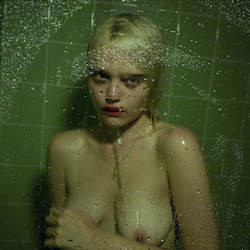
 With Sky Ferreira’s long-in-the-making debut album, Night Time, My Time, it’s important to separate the artist from the art. Much has been made of Ferreira’s mishandling by major labels, who attempted to posit her as the next Britney, but I’m of the mind that her first stab at the charts, 2010’s “One,” is as good a pop song as you’re going to find in the last decade. If only someone was listening back then, Ferreira the ingénue was (hypothetically) a Max Martin single away from headlining stadiums. The artist, though, found another vessel, changed her look and her aesthetics, and fought for her “art,” even when it’s apparent on this record that the real star here is the production crutching her still fragile songs.
However, it would be errant to totally exclude Ferreira from the craft that went into Night Time, My Time. There are a number of tracks here that feel like real collaborations between her keen sense of pop melodies and the lavish baubles attached by Ariel Rechtshaid, who also shares writing credit on the whole shebang. “Love in Stereo,” for instance, couldn’t work in any other range than the cool nonchalance of Ferreira’s coo. It’s effortless bubblegum. Then again, the redundancy of “Omanko” comes across as Ferriera purposely injecting her new found love of abject influences like Suicide and the buzz-goth of Garbage. It’s tiring and trite. In the entirety of the album, though, those missteps are few and far between, allowing the sparkling arrangements of Rechtshaid to take center stage.
That’s particularly true of the record’s first half, where Ferreira has invested in blatant hypnogogic nostalgia and hyper-grunge motifs, and Rechtshaid’s bright, almost glaring, production only magnifies her musings. Like falling asleep during a John Hughes movie, subconscious tendencies awaken in the synthetic swells of “24 Hours,” and “I Blame Myself.” Meanwhile, “Nobody Asked Me (If I Was Okay)” and lead single “You’re Not the One” have just enough grit to attach Ferreira to the fringes of indie-rock. The diversity between these extremes allows for the artist to parlay her appeal across the board. It’s sly, if not somewhat desperate, and it works for the most part.
This has been a banner year for the breakout, leftfield pop star—from Solange to the transformation of Tegan and Sara— and Ferreira ’s entry is no exception. In fact, it might be the best attempt so far. That said, comparisons to Madonna in the ’80s are unfounded. First, she’ll need to establish a vision with more teeth, more personality. She’ll also need to find her own voice, something she doesn’t really have here, and then we might start taking her seriously as an artist.
Your Comments