
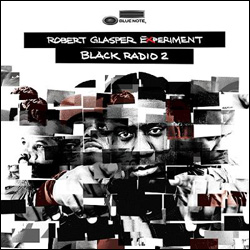
 Sequelitis is commonplace in Hollywood, but its “familiarity breeds comfort” approach has increasingly gotten a foothold in the music industry. While in the past bands would often invoke the specter of earlier, universally loved works as either a sign of course correction or playing off of nostalgia, now more than ever artists are just slapping a number after the title and hoping the craven approach isn’t a turn-off. This practice can be seen in various genres, but it’s particularly rampant in the hip-hop and R&B worlds. Add to the growing list Black Radio 2, the sequel to the Robert Glasper Experiment’s Grammy award-winning album.
On the one hand, you can’t fault Glasper. Jazz musicians generally have a lower profile than their contemporaries, so if you do manage to win the Grammy for Best R&B Album and not a jazz Grammy, it makes sense to take the raised profile and run with it. But to name a new record after one that came out less than 21 months ago seems a touch desperate. There’s nothing wrong with continuing down the path, but ultimately the record should stand on its own merit.
Like its predecessor, Black Radio 2 pairs the Robert Glasper Experiment—Robert Glasper on keyboards, Derrick Hodge on bass, Mark Colenburg on drums, and Casey Benjamin on vocoder and saxophone—with a stacked roster of singers and rappers. It’s the type of record that will appeal to fans with worn copies of Red Hot & Cool and Guru’s Jazzmatazz series. It’s also the spiritual sequel to many of the records that came out during the neo-soul era. Make no mistake, the band isn’t phoning-in the performances, but there’s not the expansive exploration one expects from jazz. The playing is tasteful and sophisticated, and it’s to Glasper’s credit that he can reign in the band and let the singers shine. But when they do let go, on the Norah Jones–led, drum & bass–influenced “Let It Ride,” it’s the perfect balance of the two approaches.
As a whole, Black Radio 2 shows why Glasper is a Grammy winner. It’s a mature R&B record without being old and stuffy. It also feature possibly some of the best performances in years from Brandy and Faith Evans. It falls short in the “radio” part of the title, a concept that gets dropped fairly early on, and the voicemail messages interspersed throughout the album, while a running theme in Glasper’s work, are fairly extraneous. And unfortunately the Snoop and Lupe collaboration, “Persevere” is deeply lackluster, while Patrick Stump seems poorly utilized when matched with Common on “I Stand Alone.” However, those are minor speedbumps, and Black Radio 2 is a station worth adding to your presets.
Your Comments