
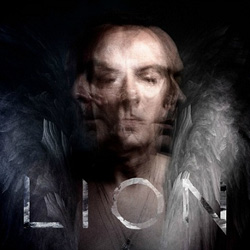
 No one ever wants to be labeled. Who wants to be considered “alternative?” Bands may want to actively shrug the tags, but after a certain point, what can you do? It becomes a bigger sticking point the longer an act exists, even more so when that act plays a part in creating a genre. Such is the case with Peter Murphy. Many people cite Bauhaus’ 1979 single “Bela Lugosi’s Dead” as the first goth rock song, and thus the band, comprised of Murphy, Daniel Ash, David J. and Kevin Haskins, has forever been labeled as goth. It wasn’t something they actively courted, as it wasn’t a thing when they formed, and you could just as easily categorize them as a post-punk band. But that’s not what stuck. So be it by hook or crook, you are what you have been perceived to be, and like it or not, Murphy is the declared godfather of goth. Which means that everything he has subsequently done is viewed through that lens, including his 10th and latest solo record, Lion (Nettwerk Records).
There’s no mistaking whose album it is when it comes to Murphy, as what he does is very specific. That specificity, however, doesn’t translate to doing the same thing over and over again. Instead, it’s like a combination of taking the same ingredients and tweaking them slightly to come up with something new, while at the same time resonating so strongly that it takes on a timeless quality. As such, Lion is unmistakeable as a Peter Murphy album, which is both a good and a bad thing. On the one hand, it’s admirable to not chase trends. On the other, it’s nice when there’s an attempt to contemporize. Lion could have come out at nearly any point in Murphy’s career. Perhaps, it’s the influence of Killing Joke’s Youth on production. Maybe he wanted Murphy in a comfortable place. Or perhaps it was purely by accident that the instrumentation and the arrangements scream throwback. It’s telling that the most unique track is the opener, “Hang Up,” which is reminiscent of David Bowie’s Outside, itself a tapping into the goth and industrial movements.
That’s not to say that Lion is bad record or that familiarity breeds contempt. In fact, Murphy’s voice is startling clear, his trademark baritone being utilized in a much higher register and a much more unrestrained manner than in the past. And while in interviews there’s been talk that much of the record’s lyrics were written on the fly, his dark stanzas are poetic as ever. But it’s also a record that offers no real sense of surprise. It’s Murphy essentially doing what he always does, which may be what you want, but it also would have been nice to have some unexpected moments. There are a number of good, even great songs on the record, but somehow the greatest emotion it conjures is nostalgia, though Murphy doesn’t overtly wallow in the mire. Overall, though, Lion is ultimately inconsequential.
Your Comments